


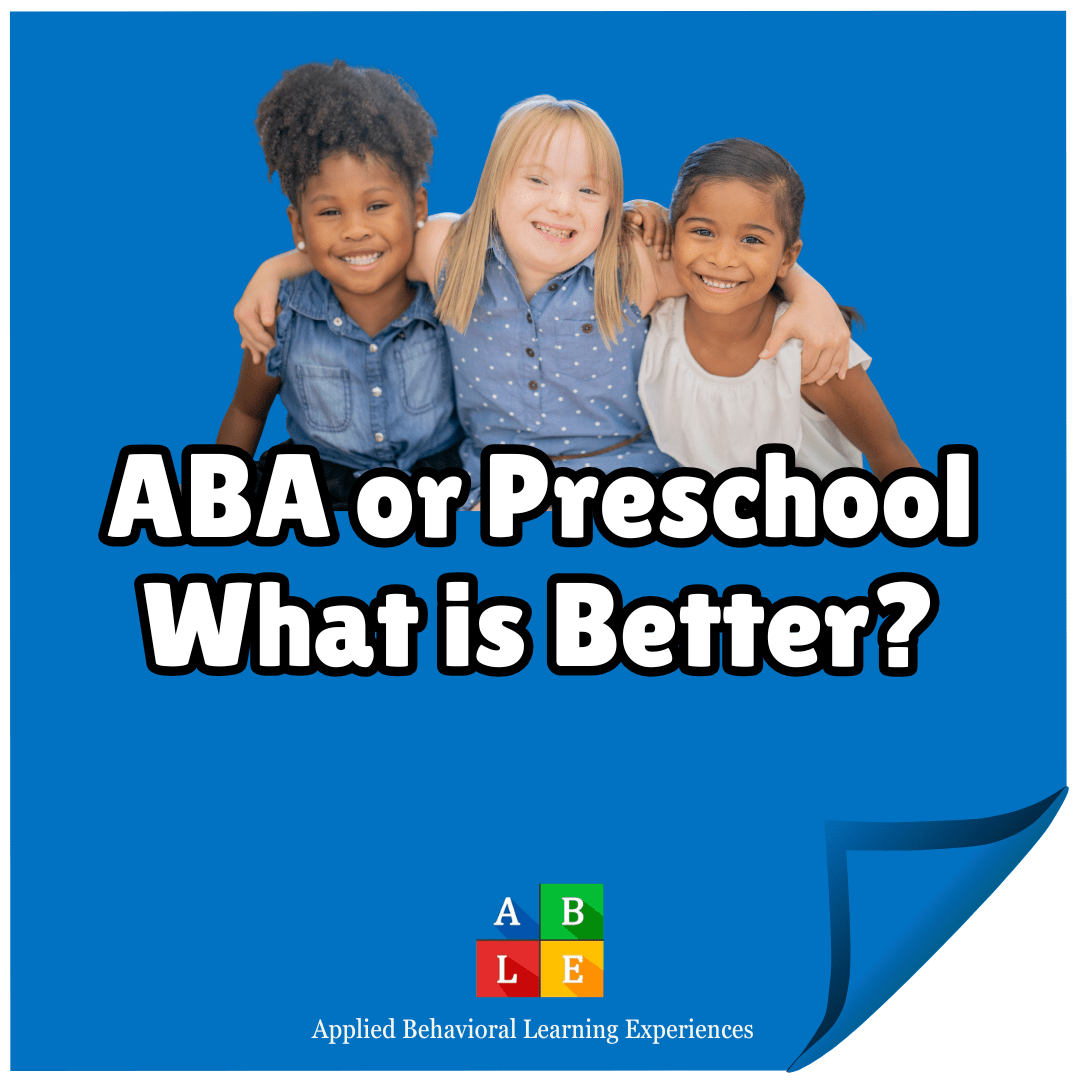
ABA Therapy or Preschool, What is better? Understanding the Difference for Young Children with Autism
For many parents of a young child with autism, one of the biggest questions is, “Should my child start preschool, ABA therapy, or both?” It is an important question, especially when your child is only 2 or 3 years old and you are trying to decide what environment will best support their development.
Preschool and ABA therapy serve different purposes. Preschool is primarily an educational and social environment where children learn alongside other children. ABA therapy is an individualized intervention designed around a child’s specific developmental and behavioral needs.
For some children with autism, especially those who need significant support with communication, social skills, daily living skills, or challenging behaviors, an individualized ABA program may provide more targeted support than a traditional preschool setting alone.
Research on early intervention shows that starting developmental and behavioral support early can improve opportunities for learning and progress, although outcomes vary from child to child.
At ABLE, we provide in-clinic ABA therapy for children with autism as early as age 2 in Brandon, Tampa, Plant City, and Lakeland, giving families an opportunity to begin building important skills before their child enters a traditional school environment.
Preschool and ABA Therapy Are Not the Same
One of the most important things for parents to understand is that preschool and ABA therapy have different goals.
A preschool classroom is designed to educate and socialize a group of children. Children participate in classroom activities, follow a daily schedule, interact with peers, and learn early academic and social concepts.
ABA therapy is individualized. A BCBA develops goals based on the child’s current skills and areas of need. Therapy can focus on communication, social interaction, independence, following directions, play skills, toileting, transitions, and other meaningful developmental goals.
This difference can be especially important for a young child who needs more individualized support than a classroom can typically provide.
What Does Preschool Provide?
Preschool can provide children with valuable experiences that are important for development.
Children have opportunities to:
- Interact with other children
- Practice sharing and taking turns
- Follow classroom routines
- Participate in group activities
- Develop early academic skills
- Practice independence
- Experience a structured school environment
For many children with autism, these experiences can be extremely valuable.
However, a preschool teacher is responsible for supporting an entire classroom. Even in a supportive preschool, it may not be possible to provide one-on-one instruction throughout the day based entirely on one child’s individual goals.
What Does ABA Therapy Provide?
ABA therapy takes a different approach. Instead of starting with what the classroom needs from the child, therapy starts with what the child needs to learn.
An ABA program can be designed around specific goals such as:
- Communication: A child who is not yet speaking may work on requesting a favorite toy, asking for help, responding to questions, or developing their first words.
- Social Skills: Therapy can help children practice playing with others, taking turns, responding to peers, initiating interaction, and participating in group activities.
- Independence: Children can learn everyday skills such as dressing, eating, washing their hands, cleaning up, and using the bathroom.
- Following Directions: Children can practice listening to instructions, completing tasks, and moving from one activity to another.
- Transitions and Flexibility: Many young children with autism find changes in activities or routines difficult. ABA therapy can help them gradually learn how to transition between activities and handle changes more successfully.
- Behavior and Communication: When a child has difficulty communicating what they want or need, frustration can sometimes result in challenging behaviors. ABA therapy can focus on teaching functional communication and other skills that help children express themselves.
Why ABA Therapy Can Be Helpful Before Preschool
The years before preschool can be an important opportunity to build foundational skills.
Early intervention is recommended because young children’s brains are still developing rapidly, and early support can create important opportunities for learning. The National Institute of Child Health and Human Development notes that early intervention can support communication, social, emotional, thinking, and physical skills, and that starting support earlier can increase opportunities for progress.
For a child who is not yet communicating, struggling with basic routines, or having difficulty interacting with others, spending time in a targeted ABA program before entering a traditional classroom may help build skills that make future school experiences more manageable.
The goal is not to keep children away from other children. The goal is to help them develop the skills they need to participate more successfully in environments with other children.
Does ABA Therapy Replace Preschool?
Not necessarily.
ABA therapy and preschool can complement each other. Some children may benefit from ABA therapy while also attending preschool. Others may benefit from a period of more intensive early intervention before transitioning into a classroom setting.
There is no single answer that works for every child.
The right approach depends on your child’s communication skills, developmental level, social skills, independence, behavior, family priorities, and overall needs.
At ABLE, our goal is not simply to put a child into therapy. Our goal is to identify meaningful skills that can help that child become more independent and successful in everyday life.
ABA Therapy Can Help Prepare Children for School
One of the biggest advantages of early ABA therapy is the opportunity to work on school-readiness skills.
Before a child enters preschool or kindergarten, they may benefit from learning how to:
- Sit and participate in an activity
- Follow simple instructions
- Ask for help
- Communicate wants and needs
- Transition between activities
- Wait and take turns
- Participate in group activities
- Follow a daily routine
- Interact appropriately with peers
- Become more independent
These skills can help children feel more confident as they eventually enter a classroom environment.
Why Starting at Age 2 Can Make a Difference
Parents sometimes think they should wait until their child is older before starting therapy.
But there is no need to wait for a child to reach preschool age before seeking support. Autism can sometimes be diagnosed before age 2, and early intervention may begin during the toddler years.
At ABLE, we provide in-clinic ABA therapy for children with autism as early as age 2. Starting at this age gives families additional time to work on foundational skills before the demands of school increase.
A child’s first words, first independent bathroom trip, first successful transition, or first interaction with another child may seem like small moments. For a family, however, those moments can represent enormous progress.
ABA Therapy in Lakeland, Brandon, Tampa, and Plant City
ABLE provides individualized ABA therapy for children with autism in Lakeland, Brandon, Tampa, and Plant City.
Our in-clinic programs are designed to provide young children with a supportive environment where they can work on meaningful developmental goals through structured and engaging activities.
We work closely with families to understand each child’s strengths and needs and to help parents understand how they can support their child’s progress outside of therapy.
So, Which Is Better for Your Child?
Instead of asking whether ABA therapy is “better” than preschool, a better question may be:
“What does my child need right now?”
For some children, preschool may provide exactly the social and educational experience they need.
For others, particularly young children with autism who need significant individualized support, ABA therapy may provide targeted intervention that a group preschool classroom cannot offer on its own.
And for many children, ABA therapy and preschool can work together.
The most important thing is to start with your child’s individual needs rather than comparing one environment against another.
Give Your Child an Early Start
If your child has autism and is still very young, you do not have to wait until kindergarten or even preschool to begin building important skills.
Early intervention gives children more opportunities to practice communication, social interaction, independence, and learning skills while they are young.
At ABLE, we are here to help families take that first step.
Start Your Child’s Journey With ABLE
If you are looking for ABA therapy for your child with autism, our team would love to help.
We provide in-clinic ABA therapy for children as early as age 2 in:
- Lakeland
- Brandon
- Tampa
- Plant City
Click Here Fill out our intake form today and learn how early intervention ABA therapy can support your child’s development or contact us via phone: (863) 619-2809 or email intake@applied-behavioral.com
The earlier you begin exploring your options, the sooner you can start building a foundation for your child’s future.
“Children with autism may take a different path, but with early support, patience, and opportunity, that path can lead to places more beautiful than we ever imagined.”
Related Post

We Are Hiring BCBAs in Central Florida: Join ABLE and Help Us Expand Autism Support
At ABLE (Applied Behavioral Learning Experiences) we want every child with autism to have access

ABA Tools and Tips to Support Kids with Autism During Florida’s Cold Weather
Even in Florida, colder mornings can disrupt routines for children with autism. A sudden temperature
There are no comments