


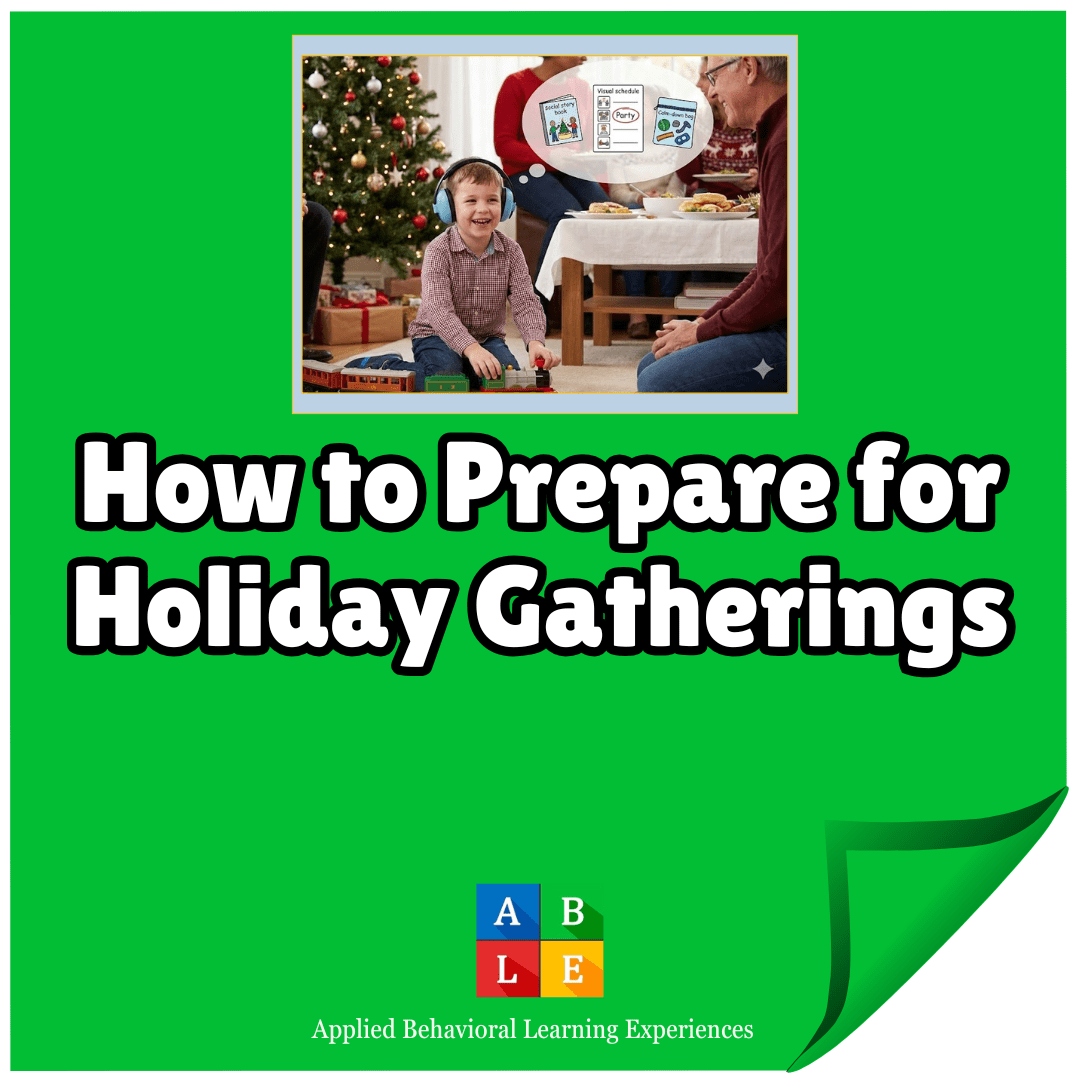
How to Prepare Your Child With Autism for Holiday Gatherings
Holiday gatherings can be a wonderful way for families to connect, but for children with autism, these events may feel overwhelming because of the new environments, loud conversations, unfamiliar faces, and changes in routine can increase stress and anxiety. With thoughtful preparation and Applied Behavior Analysis (ABA Therapy) strategies, families can help their child feel more comfortable and confident during holiday celebrations.
If you are looking for autism holiday tips for families or support through applied behavior analysis in Tampa, Brandon, Plant City, Clearwater and Lakeland, Florida, this guide offers practical steps you can use right away.
Why Holiday Gatherings Can Be Challenging for Children With Autism
Holiday events often include several triggers that can be difficult for children on the spectrum, including:
- Crowded rooms and loud noises
- Unpredictable schedules
- New foods and strong smells
- Increased social expectations
- Longer periods without breaks
Understanding these challenges is the first step in helping your child succeed during the holidays.
ABA Based Tips to Prepare Your Child for Holiday Gatherings
1. Talk About the Event Ahead of Time
Begin preparing your child several days before the gathering. Use simple language to explain where you are going, who will be there, and what will happen. Repetition helps build familiarity and reduces anxiety.
ABA Tip: Break the event into small steps using task analysis. Check off or remove each step as it is completed to reinforce progress.
2. Use Visual Schedules
Visual schedules are a core ABA strategy. Create a simple schedule that shows steps such as getting dressed, traveling, greeting family, eating, playtime, and going home. This helps children know what to expect and feel more in control.
ABA Tip: Use priming by reviewing the plan daily. Pair verbal explanations with pictures or simple visuals to strengthen understanding.
3. Practice Social Skills at Home
Role play common holiday interactions such as saying hello, waving, or asking for a break. Practicing ahead of time allows children to build confidence and reduces stress during real situations.
ABA Tip: Use modeling and prompting during role play, then gradually fade prompts so your child can practice independently.
4. Prepare a Sensory Break Plan
Identify a quiet space where your child can take breaks if they feel overwhelmed. Bring comfort items such as headphones, fidgets, or a favorite toy. Teaching your child to request a break is an important skill supported through ABA therapy.
ABA Tip: Teach functional communication by practicing how to request a break using words, pictures, or a device before the event.
5. Set Clear and Flexible Expectations
Decide in advance which behaviors are most important and which ones can be flexible. Your child does not need to participate in every activity to have a successful experience. Celebrate effort rather than perfection.
ABA Tip: Focus on reinforcing target behaviors only. Avoid correcting every behavior so your child experiences success and motivation.
6. Use Positive Reinforcement
Praise and reinforce your child for trying new things, tolerating noise, or following directions. Positive reinforcement encourages progress and builds confidence during challenging situations.
ABA Tip: Deliver reinforcement immediately and specifically, such as “Great job sitting at the table” to strengthen learning.
7. Maintain Familiar Routines When Possible
Try to keep consistent sleep, meal, and break schedules. When routines must change, prepare your child ahead of time and offer extra support during transitions.
ABA Tip: Use transition warnings such as timers or countdowns to prepare your child for schedule changes.
After the Gathering: Reflect and Reinforce
Once the event is over, talk with your child about what went well. Reinforce positive behaviors and note what strategies worked best so you can use them again for future gatherings.
ABA Tip: Use reinforcement after the event to strengthen positive memories and increase success in future situations.
Supporting Families Through Applied Behavior Analysis in Tampa, Plant City, Brandon, Clearwater and Lakeland.
At ABLE, we understand that holidays can bring both joy and challenges for families of children with autism. Our experienced team of BCBAs, BCaBAs and RBTs provides personalized ABA therapy to help children develop communication, social, and coping skills that support real life situations like holiday gatherings.
We proudly offer applied behavior analysis in Tampa, Brandon, Plant City, Clearwater and surrounding areas, with services available in clinic, home, school, and community settings.
Start Your Journey With ABLE
If you are looking for autism holiday support or long term therapy solutions, we are here to help, click here to fill out your intake form or contact us:
Call us at (863) 619 2809
Email intake@applied-behavioral.com
Let us help your child feel confident, supported, and successful this holiday season and beyond.
Related Post

Flu Season, Missed School, and ABA Therapy: How to Keep Progress Going at Home
Between the cold Florida mornings and hot afternoons, flu season has officially arrived. This can
Why ABA Therapy Continues to Be the Best Approach for Supporting Children With Autism in 2026
As we look ahead to 2026, the autism community continues to grow stronger through increased
There are no comments