


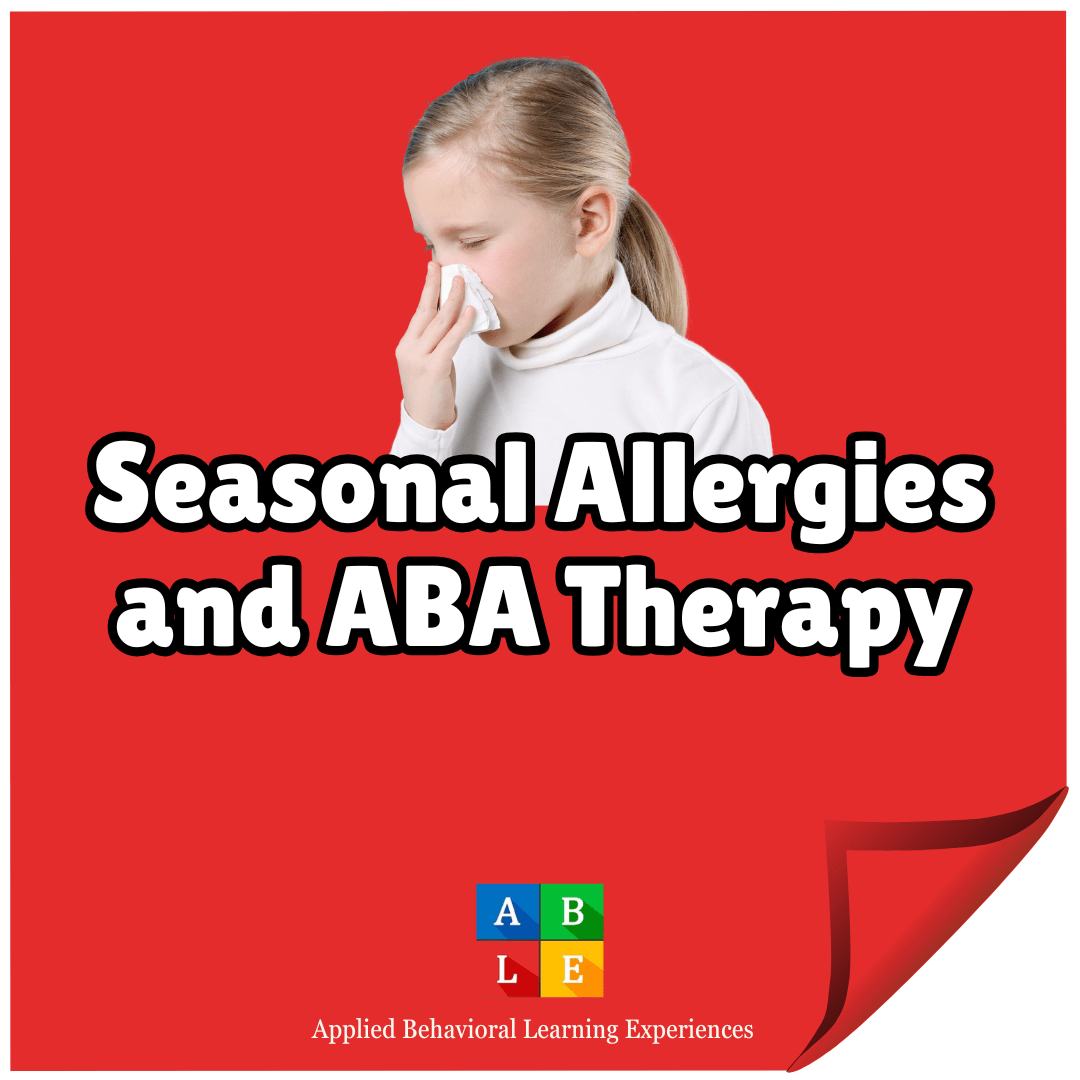
How Seasonal Allergies Can Impact Behavior in Children With Autism and How ABA Helps
For children with autism, allergies can sometimes lead to changes in behavior, mood, and daily routines.
Spring in Florida brings warmer weather, blooming flowers, and more time outdoors. However, it also brings seasonal allergies that can affect children in ways many parents may not expect.
At ABLE (Applied Behavioral Learning Experiences), we support families with ABA therapy in Lakeland, Tampa, Brandon, Plant City, and Clearwater, and we often help parents navigate seasonal challenges like allergies while maintaining progress.
How Seasonal Allergies Affect Children With Autism
Seasonal allergies can cause discomfort such as:
- Runny or congested nose
- Itchy eyes or skin
- Headaches or fatigue
- Trouble sleeping
For children with autism, who may already experience sensory sensitivities or communication challenges, these symptoms can feel overwhelming. Because some children may not be able to clearly express how they feel, discomfort can show up as: increased irritability or tantrums, difficulty focusing during tasks, changes in sleep patterns, and resistance to routines or transitions
Understanding that behavior can be a form of communication is key. What may look like a sudden behavior change could actually be a response to physical discomfort.
The Connection Between Allergies and Behavior
When a child is uncomfortable, tired, or overstimulated, it becomes harder to regulate emotions and follow routines. This is especially true during spring when exposure to pollen and environmental changes increases.
Children receiving autism therapy in Tampa and across Central Florida may show temporary regression or increased behaviors during allergy season. This is normal and can be addressed with the right support.
How ABA Therapy Helps During Allergy Season
ABA therapy focuses on understanding behavior and teaching skills that help children cope with challenges, including seasonal changes.
1. Identifying Triggers:
What causes the allergy? ABA therapists work with families to identify patterns between allergy symptoms and behavior changes. This helps create more effective strategies.
2. Teaching Communication Skills
Children are taught to express discomfort in appropriate ways, such as requesting a break, asking for help, or using simple communication tools.
3. Adjusting Expectations
During allergy season, ABA programs can be adjusted to match the child’s energy and comfort level, while still maintaining consistency.
4. Reinforcing Coping Skills
Positive reinforcement is used to encourage calm behavior, flexibility, and cooperation during uncomfortable moments.
5. Supporting Routines
Even when allergies disrupt daily life, maintaining structure with visual schedules and predictable routines helps reduce stress.
Tips for Parents During Allergy Season
In addition to ABA support, parents can help by:
- Keeping track of allergy symptoms and behavior changes
- Maintaining consistent routines at home
- Communicating with your ABA team about any changes
- Creating a calm, low-demand environment when needed
Small adjustments can make a big difference in how your child experiences the season.
Supporting Families Across Central Florida
At ABLE, we provide individualized ABA therapy in Lakeland, Tampa, Brandon, Plant City, and Clearwater, helping children with autism build skills while adapting to real-life challenges like seasonal allergies.
Our team works closely with families to ensure therapy remains effective, supportive, and flexible throughout the year.
Get Support This Spring
Seasonal allergies may be temporary, but the support your child receives can have lasting impact. With the right ABA strategies, children can continue making progress while learning how to manage discomfort and changes in their environment.
If you are looking for ABA therapy in Lakeland, Tampa, Brandon, Plant City, or Clearwater, contact us today to get started.
Click Here to fill out our intake form or call us” (863) 619 2809
Related Post

Flu Season, Missed School, and ABA Therapy: How to Keep Progress Going at Home
Between the cold Florida mornings and hot afternoons, flu season has officially arrived. This can
Why ABA Therapy Continues to Be the Best Approach for Supporting Children With Autism in 2026
As we look ahead to 2026, the autism community continues to grow stronger through increased
There are no comments