


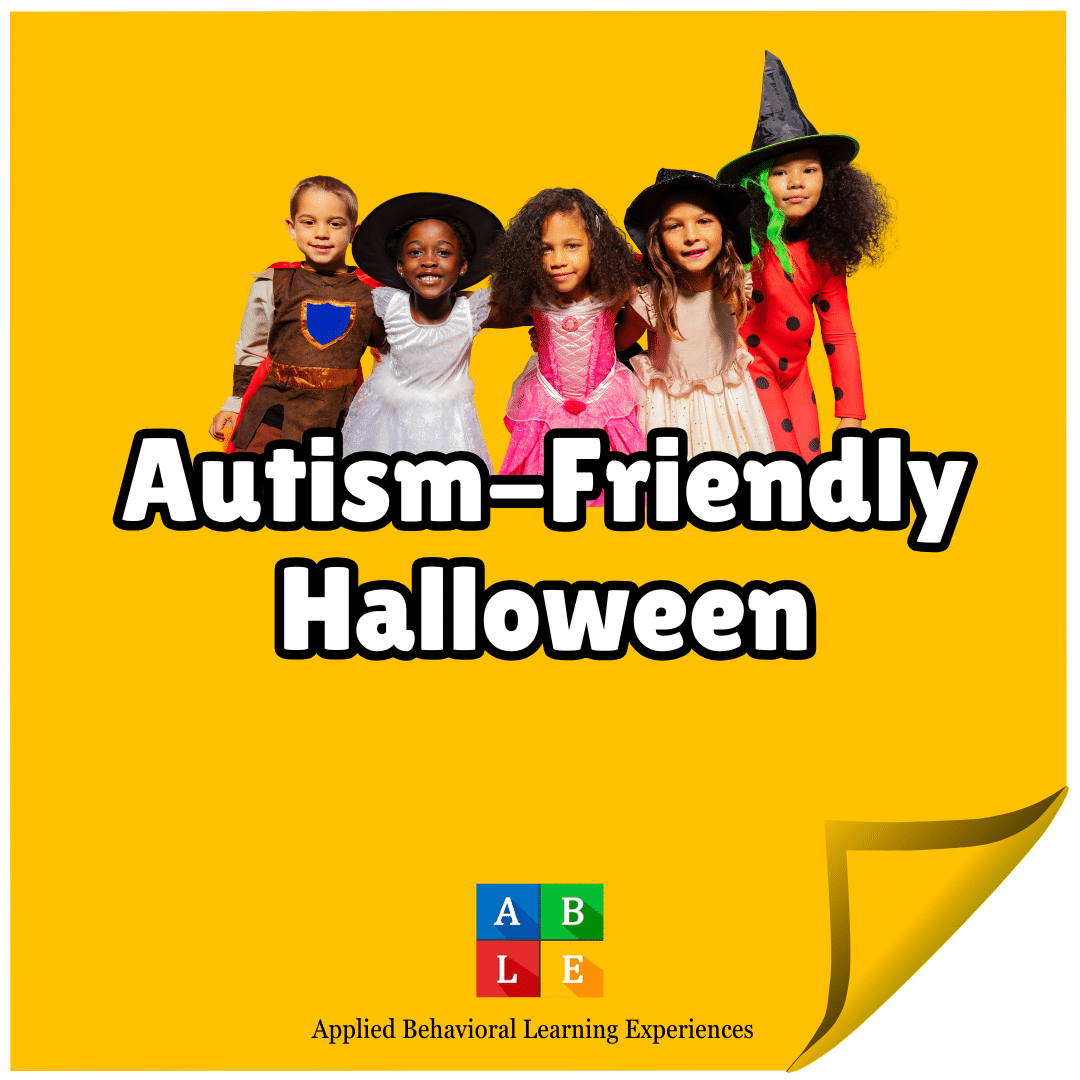
7 Autism-Friendly Halloween Activities for Young Children
Halloween can be an exciting time for young children, but for children with autism, some traditional Halloween activities can also feel overwhelming. New sights, loud sounds, unfamiliar costumes, changes in routine, crowds, and unexpected experiences can make Halloween more challenging.
The good news is that Halloween does not have to be overwhelming to be fun.
With a little preparation and some creativity, parents can create autism-friendly Halloween activities that allow children to participate in ways that feel comfortable, predictable, and enjoyable.
At ABLE, we believe every child deserves opportunities to play, explore, learn, and celebrate in a way that works for them. Here are seven Halloween activities families can try with young children with autism.
1. Have a Halloween Sensory Play Activity
Sensory play can be a fun way to introduce Halloween sights, textures, and objects in a comfortable environment.
Try creating a simple Halloween sensory bin using child-friendly items such as:
- Plastic pumpkins
- Large Halloween-themed toys
- Scoops and cups
- Soft fabrics
- Toy spiders
- Plastic bats
- Halloween-colored objects
Let your child explore at their own pace. They do not have to touch every item or participate in a specific way.
If your child does not like certain textures, give them other ways to participate, such as using a scoop or looking at the objects instead.
The goal is exploration, not forcing participation.
2. Decorate Halloween Pumpkins
Pumpkin decorating can be a great alternative to traditional pumpkin carving, especially for young children.
Instead of using sharp carving tools, let your child decorate a pumpkin with:
- Stickers
- Washable paint
- Crayons or markers
- Large craft decorations
- Googly eyes
- Ribbons or other decorations
You can also create a simple step-by-step visual guide showing your child what will happen first, next, and last.
This can make the activity more predictable while giving your child an opportunity to practice following directions, making choices, and completing a fun project.
3. Make Halloween-Themed Treats
Cooking and baking can turn Halloween into an opportunity to practice everyday skills.
Try making simple Halloween snacks together, such as decorated cookies, fruit skewers, or sandwiches cut into Halloween shapes.
Your child can participate in small steps such as:
- Gathering ingredients
- Choosing between two options
- Pouring
- Mixing
- Decorating
- Cleaning up
For children who have food sensitivities or selective eating habits, remember that participating does not have to mean eating the finished product.
The experience itself can be valuable.
4. Practice Trick-or-Treating at Home
If your child is nervous about trick-or-treating, practice can help make the experience more predictable.
Set up a pretend trick-or-treating activity at home.
Have a family member stand at the door and practice:
- Walking to the door
- Knocking or ringing the bell
- Saying or communicating “trick or treat”
- Waiting
- Receiving a treat
- Saying “thank you” or using another appropriate response
- Walking away from the door
You can repeat the routine several times so your child knows what to expect.
And remember, your child does not have to say “trick or treat” verbally. Communication can look different for every child.
5. Create a Halloween Scavenger Hunt
A simple Halloween scavenger hunt can turn a walk around the house or neighborhood into a fun learning activity.
Make a picture-based checklist with things your child might see, such as:
- Pumpkin
- Ghost decoration
- Spider
- Bat
- Candy
- Witch
- Black cat
For young children, pictures may be easier to understand than written instructions.
A scavenger hunt can also provide opportunities to practice attention, following directions, matching, identifying objects, and communicating.
6. Have a Halloween Dance Party
Halloween does not always have to mean going somewhere crowded.
Create a small Halloween dance party at home with music your child enjoys.
You can:
- Play familiar songs
- Dance together
- Practice copying movements
- Use Halloween-themed decorations
- Turn the lights down if bright lights are uncomfortable
Keep your child’s sensory preferences in mind. If loud music is uncomfortable, lower the volume or choose quieter music.
The goal is to have fun together while allowing your child to participate in a way that feels comfortable.
7. Create a Calm Halloween Night
For some children, the best Halloween activity may be a quiet one.
If costumes, crowds, loud noises, or trick-or-treating are overwhelming, create a cozy Halloween experience at home.
You could:
- Read a Halloween story
- Watch a favorite Halloween movie
- Color Halloween pictures
- Decorate the house together
- Play with favorite toys
- Have a special snack
There is no single “right” way to celebrate Halloween.
Your child’s Halloween can look different from another child’s, and that is perfectly okay.
Helping Your Child Prepare for Halloween
Preparation can make new experiences easier for many children with autism.
Before Halloween, consider using a visual schedule, social story, pictures, or simple explanations to show your child what to expect.
You might practice wearing the costume before Halloween night, visit the area where you plan to trick-or-treat, or practice walking to a door and receiving a treat.
Most importantly, follow your child’s cues.
If your child needs a break, offer one. If they do not want to wear a costume, consider a Halloween-themed shirt or another option. If trick-or-treating becomes too much, it is okay to go home.
Halloween should be about creating positive experiences, not forcing a child to participate in every tradition.
ABA Therapy Can Help Children Build Everyday Skills
Many of the skills involved in Halloween activities are also skills children practice throughout the year.
At ABLE, individualized ABA therapy for young children with autism can focus on meaningful skills such as communication, following directions, social interaction, transitions, play, self-care, independence, and participating in everyday routines.
Our team works with each child based on their individual strengths, needs, and goals.
Sometimes progress happens during structured learning. Other times, important skills can be practiced naturally through play, crafts, games, and everyday activities.
ABA Therapy in Central Florida
ABLE is proud to support children and families throughout Central Florida.
Our ABA therapy clinics are located in: Lakeland, Brandon, Tampa, Plant City, and Clearwater.
If your child has received an autism diagnosis and you are exploring ABA therapy, Click Here to fill out our online intake form to learn more about getting started with ABLE or contact us via phone: (863) 619 2809 or email: intake@applied-behavioral.com
Halloween may look different for every family, and that is okay.
The most important thing is creating opportunities for your child to feel safe, included, supported, and proud of what they can accomplish.
“Every child has their own way of seeing the world. When we meet them with patience, understanding, and opportunity, we help them discover just how much they can do.”
Related Post
Autism Statistics: How Many Children Have Autism in Florida and How ABA Therapy Can Help
Autism is part of the lives of hundreds of thousands of families across the United

Success Story: Helping Aidan Overcome His Toothbrushing Resistance
Something as familiar as brushing your teeth can involve unfamiliar sensations, changes in routine, sounds,
There are no comments